




Challenge 01
Unplanned Downtime
Unexpected machine stoppages and performance losses disrupt production schedules and downstream operations.
“Will Line 2 make today’s schedule?”Production manager
Automotive & Auto Components
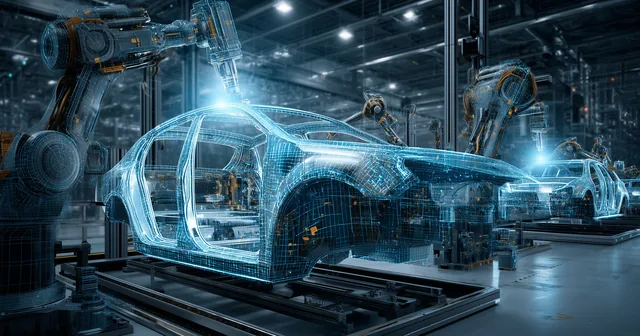
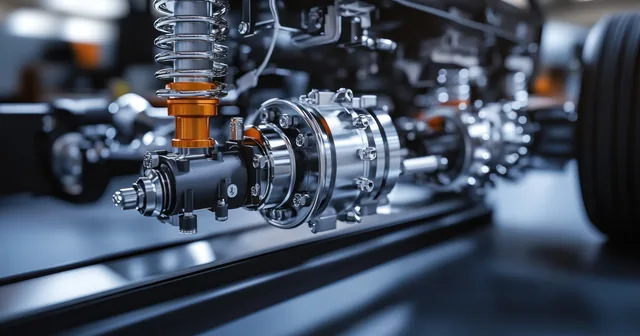
From precision machining and fabrication to assembly and inspection, DelphEon helps automotive manufacturers monitor performance, manage production activities, and maintain visibility across the shop floor.
Scroll to watch:Shown here: Machining a cylinder block on Line 2
Line 2 · Machining
Every machine, robot and part in one record.
Unexpected machine stoppages and performance losses disrupt production schedules and downstream operations.
“Will Line 2 make today’s schedule?”Production manager
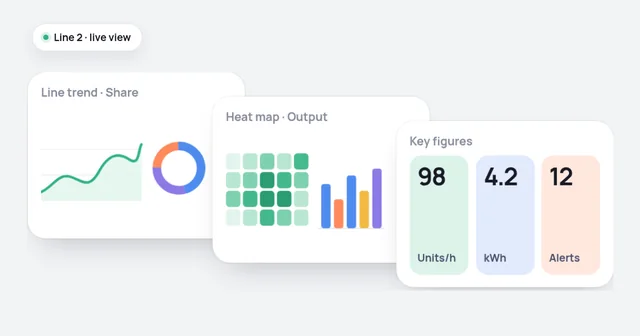
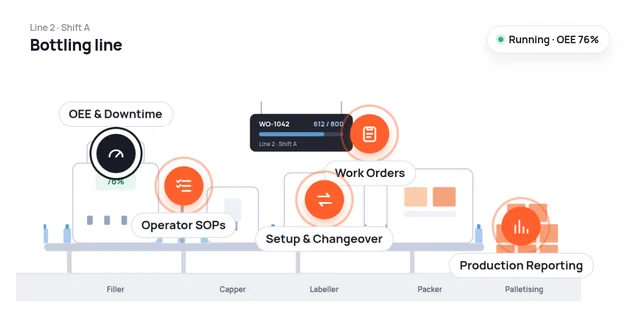
Monitor machine utilization, downtime, cycle times, and production output to identify recurring losses and improve visibility into machining performance.
On Line 2CNC-07 lost 42 minutes to six tool-change alarms this shift, not just “output was short”.
Key measuresOEE·Downtime·Cycle Time
Explore Shop Floor ExecutionMultiple variants, work orders, and changeovers make production progress harder to track.
“Which variant is running, and how far along is the work order?”Shift supervisor
Track work-order progress, setup activities, and planned versus actual output across manufacturing stages, product variants, and shifts.
On Line 2WO-2232 for SK-418-R: 292 of 320 made, after a 24-minute changeover from the LH variant.
Key measuresWork-Order Progress·Output·Changeover Time
Explore Shop Floor ExecutionDisconnected inspection and manufacturing records complicate defect investigations and component traceability.
“Which machine, shift and lot did this part come from?”Quality head
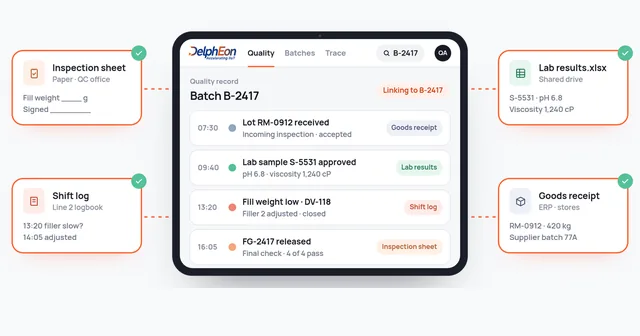
Connect inspection results with available component and production records to support quality investigations, rejection analysis, and traceability.
On Line 2Start from a rejected SK-418-L and find its machine, shift, inspection results and lot 1142.
Key measuresRejection Rate·Inspection Results·Traceability
Explore Quality Management & TraceabilityRepeated machine faults affect availability, output, and overall production reliability.
“Why does CNC-07 keep stopping on the same alarm?”Maintenance head
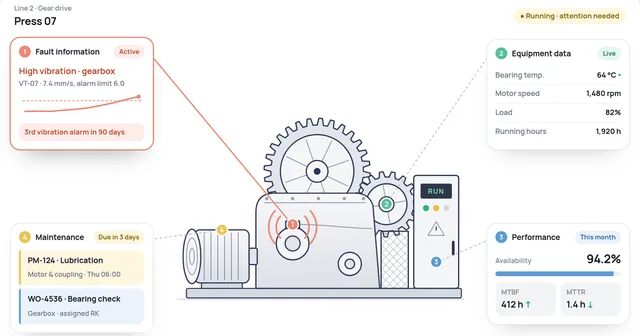
Review equipment faults, breakdown history, and maintenance activities to identify recurring issues affecting production continuity.
On Line 2CNC-07’s breakdown history and repeat alarms sit beside its MTBF and MTTR.
Key measuresMTBF·MTTR·Equipment Availability
Explore Asset Maintenance01 / 04
Zone by zone
One view from the press shop to dispatch, built around the operations an auto-component plant actually runs.
Stroke counts and die changes on a clipboard
Stroke counts, die changes and press downtime by shift.
Stops noticed when someone calls them in
Machine status, cycle time, tool-change and alarm stops for every cell.
Rework counted at the end of the shift
Station output, fixture changeovers and rework.
Variant progress on a whiteboard
Work-order progress, LH/RH variant mix and line stoppages.
Results in separate inspection sheets
Inspection results linked to the part, lot and operation.
Lots matched to parts by hand
Accepted parts or lots linked to shipment records.
One stoppage, traced
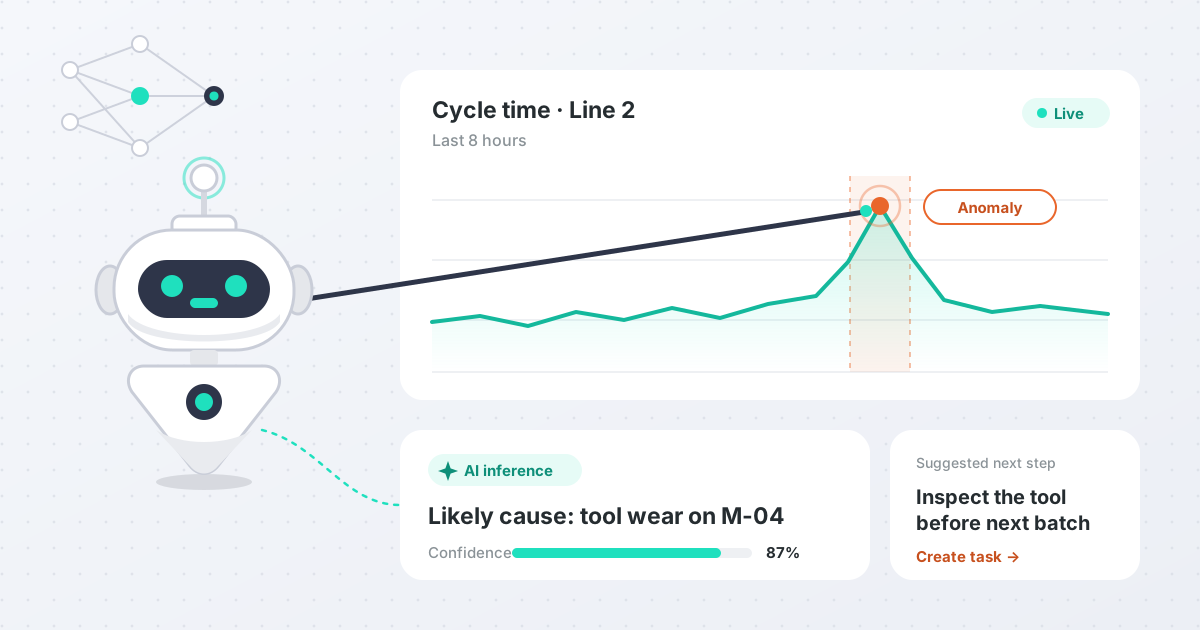
A recurring CNC stoppage may appear minor, but its cumulative impact on shift output can be significant.
DelphEon connects machine status, downtime events, and production records to help teams understand where productive time is being lost.
StoppedCNC-07 · tool-change alarm
Same alarm, 6 times this shift
Parts short against the shift plan
✓ DoneTool-life setting reviewed with the team
Getting started
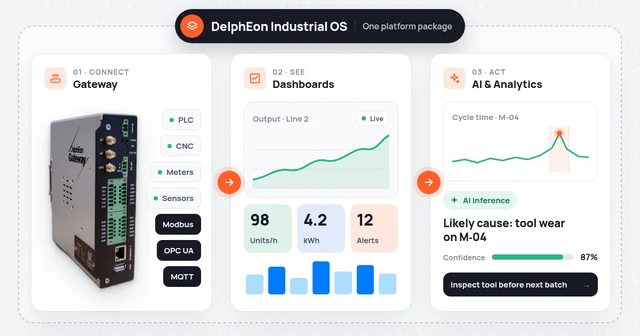
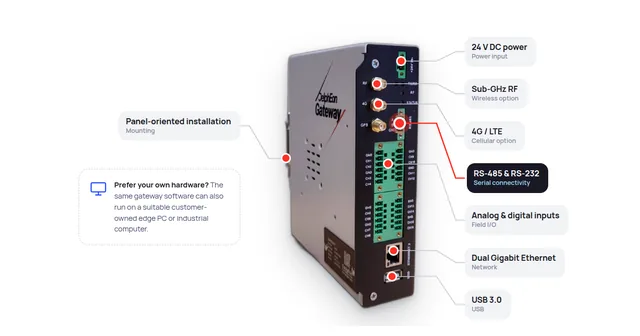
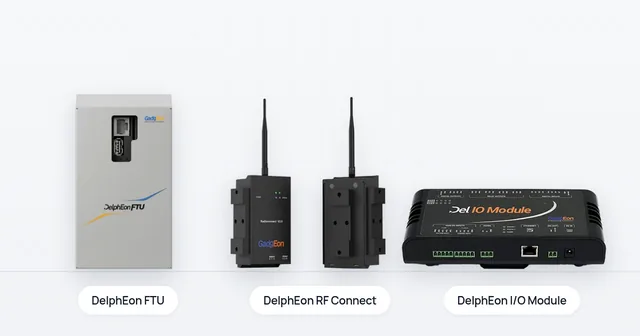
CNCs, PLCs and older machines connect through DelphEon Gateway: OPC UA, Modbus, S7, MELSEC or FANUC FOCAS2 (licensed add-on), or I/O signals for machines without a controller interface.
Begin with one line or routing that includes a quality checkpoint and a rework path, and show a full backward trace from dispatched parts.
Add lines, stations and plants once the first line’s records are trusted. Your ERP keeps its existing responsibilities.
FAQ
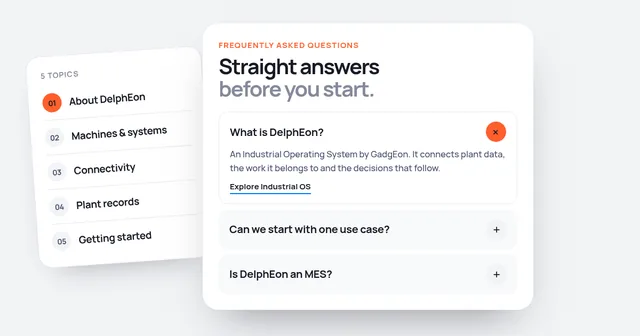
Machines with a controller interface connect through DelphEon Gateway using protocols such as OPC UA, Modbus, S7, MELSEC or FANUC FOCAS2 (a licensed add-on, subject to compatibility). Older machines without a usable interface can be connected through I/O signals such as run, stop and part count. Each machine is assessed against its exact controller.
DelphEon links inspection results to the component and production records available in your plant, by serial, lot or work order depending on how your parts are identified. Part revision, routing and lot or serial rules are agreed at the start.
No. DelphEon works alongside your existing ERP and quality systems. Which system owns orders, stock and quality records is agreed during scoping.
With one line or routing that includes a quality checkpoint and a rework path. The aim is a complete, trusted record for that line before you expand.
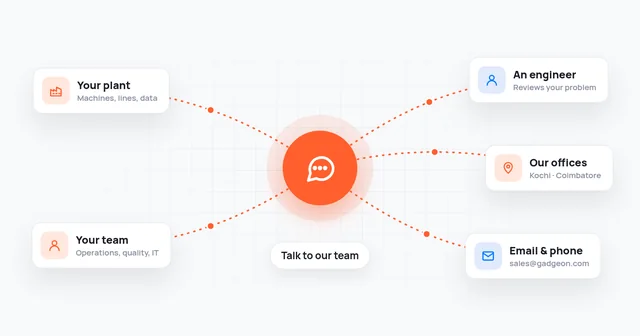
Bring greater visibility to machine performance, production execution, quality, and equipment reliability across your automotive manufacturing operations.
Discuss Your Automotive Manufacturing Requirements