


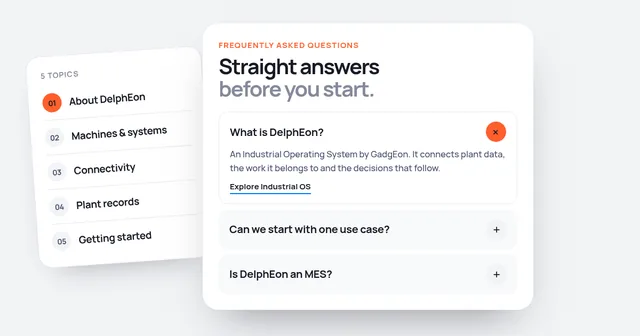


Frequently asked questions
Straight answers before you start.
DelphEon is an Industrial Operating System by GadgEon. It connects plant data, the work it belongs to and the decisions that follow. These are the questions plant, IT and operations teams ask most about fitting it into a working plant.
01
About DelphEon
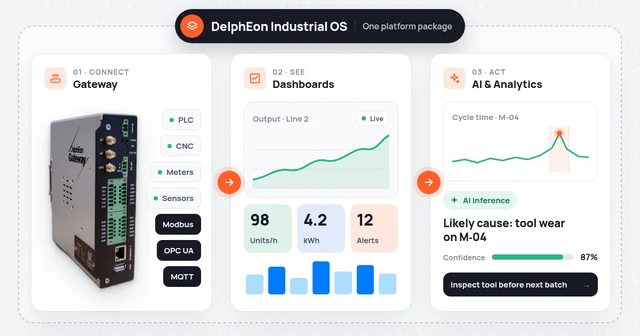
DelphEon is one platform for the plant: it connects machines, systems and people, then runs the workflows that act on that data.
What is DelphEon?
DelphEon is an Industrial Operating System by GadgEon. It connects plant data, the work it belongs to and the decisions that follow, so production, quality, maintenance, utilities and logistics teams work from the same operating record.
Explore Industrial OSIs DelphEon an MES?
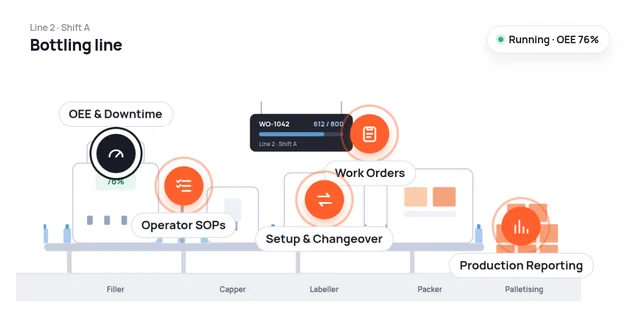
MES is part of DelphEon. The platform also connects production monitoring, quality, traceability, maintenance, process, energy and logistics workflows.
See Shop Floor ExecutionWhich solution areas does DelphEon cover?
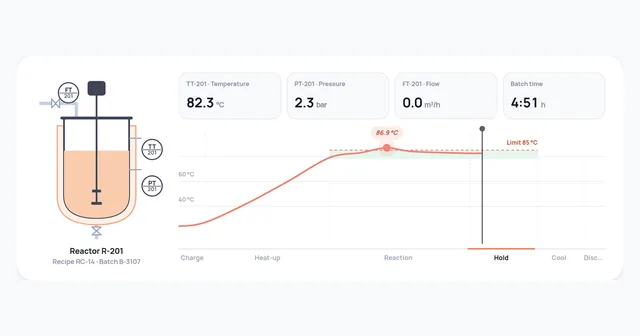
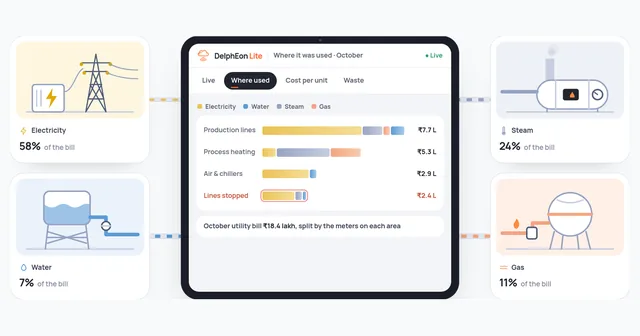
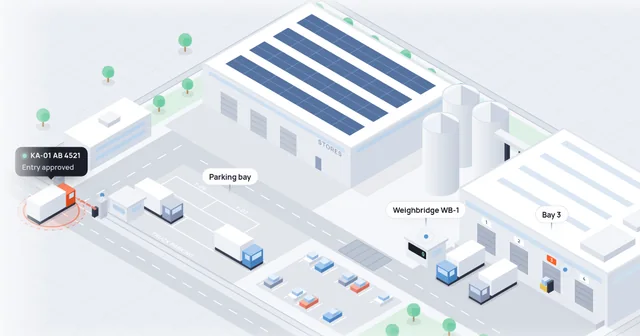
Six, on one platform: Shop Floor Execution, Quality Management & Traceability, Asset Maintenance, Process Monitoring & Batch Management, Utilities & Cost Analytics and Plant Logistics. Plants usually start with one and add the others on the same data.
Does DelphEon support discrete and process manufacturing?
DelphEon supports discrete, process and batch-oriented manufacturing, with workflows and data models configured around the operating process.
See Process Monitoring & Batch ManagementHow does DelphEon support operational intelligence?
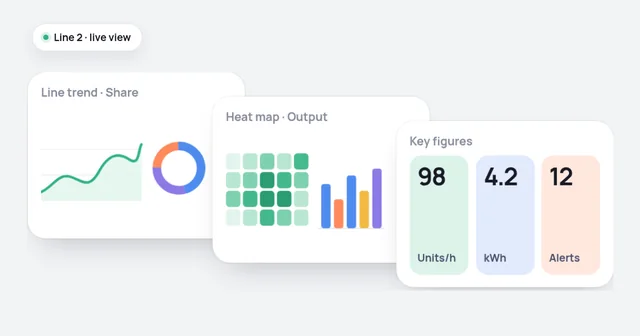
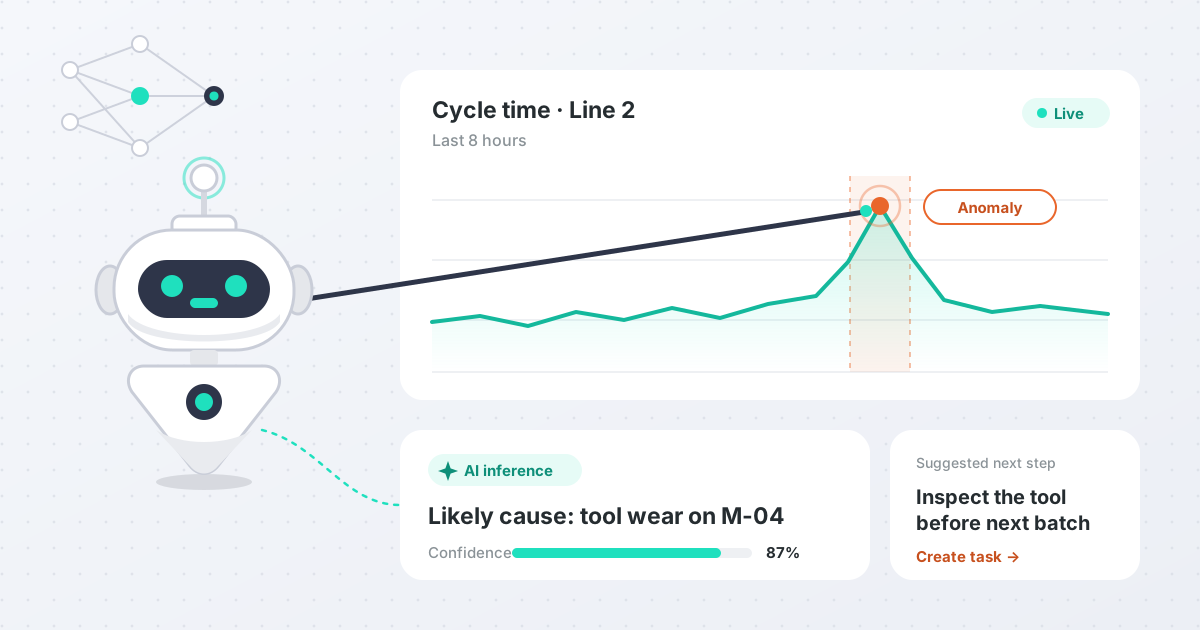
Connected industrial context provides the foundation for analytics, historical comparison, root-cause investigation, what-if analysis and predictive applications. The capabilities available in a deployment depend on its data, integrations and configured scope.
Explore AI & Analytics02
Your machines and existing systems
DelphEon is built for mixed, brownfield plants. It works alongside the equipment and software you already run.
Can DelphEon work with older machines and existing systems?
Yes. DelphEon is built for mixed equipment and existing plant systems; the right connection is defined for each source.
Can DelphEon connect to older CNC machines?
Machines with a controller interface connect through DelphEon Gateway using protocols such as OPC UA, Modbus, S7, MELSEC or FANUC FOCAS2 (a licensed add-on, subject to compatibility). Older machines without a usable interface can be connected through I/O signals such as run, stop and part count.
Explore Gateway & ConnectivityDoes DelphEon replace ERP, SCADA or an existing MES?
No. DelphEon can work with existing ERP, SCADA, MES and plant systems, filling operational gaps between equipment, manufacturing processes and enterprise applications. Which system owns orders, stock and quality records is agreed during scoping.
Can DelphEon read process data from our DCS?
Where the DCS or PLC exposes data through a supported interface such as OPC UA or Modbus, DelphEon Gateway can read process parameters from it. DelphEon is used to monitor and record; process control stays with your DCS and operators. Each system is assessed during scoping.
Does a listed protocol guarantee access to every machine signal?
No. Signal access depends on the controller model, options and firmware. We assess the exact source and device version before selection.
03
Hardware, connectivity and deployment
DelphEon edge devices collect the data; the platform runs where your architecture needs it.
Do I need DelphEon hardware to use the platform?
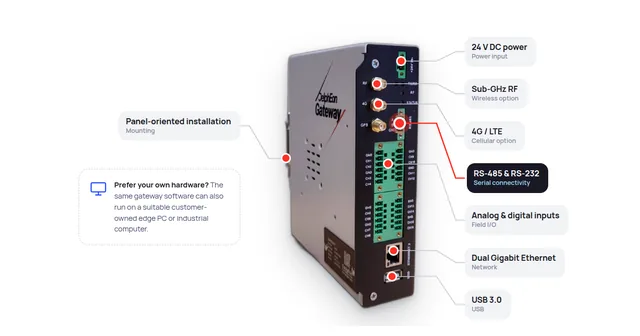
Not always. The DelphEon gateway software can also run on a suitable customer-owned edge PC or industrial computer, and existing industrial systems can be integrated. We confirm the right approach for each project.
See Edge DevicesWhich device should I start with?
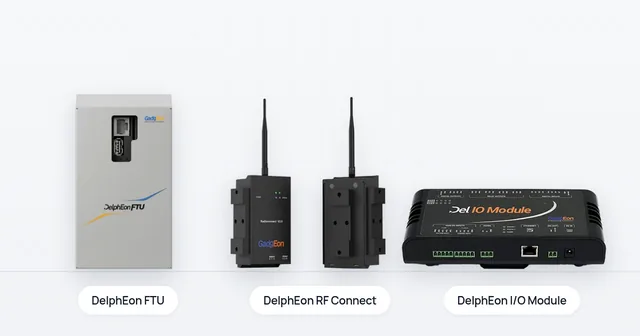
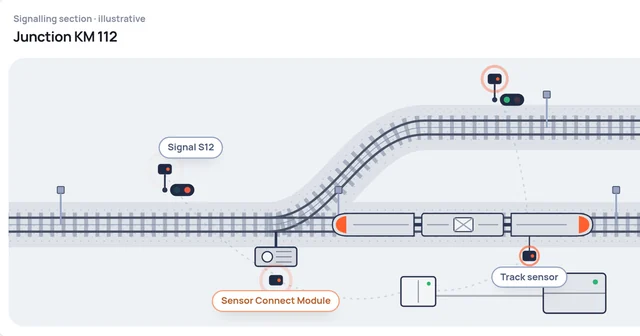
Start from the signal. To read PLCs, CNCs and meters, start with the DelphEon Gateway. For many analog signals on a remote asset, use the FTU. To add I/O to a legacy machine, use the I/O Module. Where cabling is impractical, use RF Connect. To measure electrical loads, use the Sensor Connect Module.
Can the devices work where there is no network cabling?
Yes. DelphEon RF Connect provides long-range wireless links over several kilometres in line of sight, and the DelphEon Gateway offers 4G/LTE and Sub-GHz RF options.
What happens if the network connection drops?
The DelphEon Gateway uses configurable store-and-forward buffering with retention of up to 24 days, and resends queued records automatically when the connection returns.
Where can DelphEon be deployed?
Edge, on-premises, cloud and hybrid requirements are discussed for each project, and the supported topology is confirmed for the proposed components and versions.
Discuss your architecture04
Production, quality and utility records
What teams can record and trace once machines, labs and meters are connected.
Can operators record why a machine is idle or in setup?
Yes. Where a machine reports its status automatically, operators can select the reason for a stop, setup or idle period at the machine. The reason list is agreed with your team at the start.
Can we trace a part by serial number or lot?
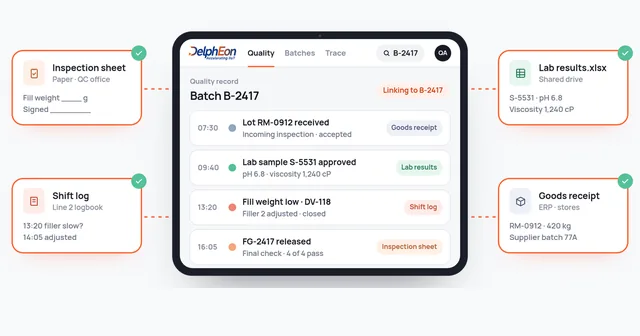
DelphEon links inspection results to the component and production records available in your plant, by serial, lot or work order depending on how your parts are identified. Part revision, routing and lot or serial rules are agreed at the start.
See Quality Management & TraceabilityCan lab results be linked to the batch?
Yes. Sample status, test results and approval status can be linked to the batch they belong to, so quality reviews see process and laboratory information together. Which tests and approval steps apply is agreed at the start.
Can DelphEon calculate yield for each batch?
Yes, where input and output quantities are recorded for the batch, whether from weighing scales, PLC counters or operator entries. DelphEon then shows yield and material loss by batch, product and line. Which stages count as input and output is agreed at the start.
Can we monitor steam, water and electricity per ton?
Utility meters with a usable output, such as Modbus or pulse signals, connect through DelphEon Gateway. Consumption is then shown against production output, for example kWh, steam or water per ton. Each meter is assessed during scoping.
See Utilities & Cost AnalyticsDoes DelphEon replace our quality or regulatory procedures?
No. DelphEon keeps process, batch and laboratory records connected for reviews and investigations. Batch release, hold decisions and regulatory obligations stay with your quality team and existing procedures.
05
Getting started
Start small, prove the value on one scope, then extend on the same platform.
Can we start with one use case?
Yes. Start with one production problem or workflow, prove value and extend on the same platform.
Where should we start?
With one line, machine group or product that carries a problem worth solving, including its quality checks and meters where they matter. The aim is a complete, trusted record for that scope before you expand.
Read customer storiesCan a system integrator or equipment maker deliver DelphEon?
Yes. System integrators and equipment manufacturers can deliver DelphEon Industrial OS around the machines they already install. Delivery scope, support ownership and commercial terms are agreed together, one engagement at a time.
See Partners & OEM